
Drum Handling Safety: Essential Equipment and Operations to Prevent Spills
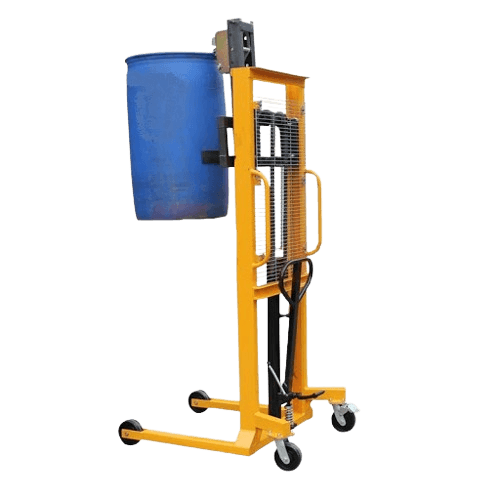
Standard 210-liter steel and plastic drums are widely used to store liquids, chemicals, and lubricants. However, when full, a single drum can weigh over 250 kg. Attempting to roll or lift these drums manually is a leading cause of back injuries, foot fractures, and hazardous chemical spills. Here is how to handle drums safely.
1. Use Specialized Drum Lifters
Never pick up a drum using standard pallet truck forks or ropes. Specialized hydraulic drum lifters grip the top rim of the drum securely, allowing it to be raised and moved with minimal physical effort. This prevents the drum from slipping during transport.
2. Drum Tilters and Dumpers for Dispensing
Pouring liquids from a heavy drum requires precise control. Drum tilters feature gear-driven handwheels that allow operators to rotate the drum up to 180 degrees slowly, ensuring smooth decanting without spills. For manufacturing lines, electric drum dumpers automate this process at high speeds.
3. Proper Storage in Spill Pallets
All liquid drums should be stored on containment spill pallets. These pallets feature built-in reservoirs that catch leaks, keeping your workshop floors clean and complying with environment protection laws.
Summary
Investing in drum handling equipment is critical for chemical and pharmaceutical companies. Sourcing robust drum lifters and tilters protects your workforce and prevents chemical cleanup costs.